To be in the time when a master is in full control of their craft is very rare. Often it is after their departure when we realize what has left us. Jiro Ono may not be a name that stands out to the majority of the world but Jiro is the subject of the documentary film Jiro Dreams of Sushi (David Gelb, 2011). Jiro is an 85 year old master sushi chef in Tokyo who runs his small, tightly ordered restaurant to perfection. His craftsmanship of sushi transcends the way in which we not only look at food but how we approach our respective passions. Jiro's wisdom and his desire for improvement are aptly portrayed by David Gelb. One will find in this film that even in the smallest of foods comes a greater meaning in how we understand life.
In a day where celebrity chef's seem to be all the rage, Jiro Ono seems to be the complete opposite of a celebrity. The 85 year old sushi chef does not sell himself or become some grandiose commodity, but rather lets his pursuit of perfection and love for food bring him accolades. His restaurant, Sukiyabasha Jiro has repeatedly been rated 3 stars by Michelin and food aficionados rate Jiro's restaurant as the best sushi resteraunt on the planet. Reservations are made a month in advance and some meals start at thirty-thousand yen (three-hundred dollars US). Even with such high awards and demands Jiro does not lose focus on the pursuit of making the best sushi.
Throughout the film Gelb films the procedures of Jiro's restaurant and the discipline it takes to be the best sushi chef. We are taken to the fish markets where experts in their respective seafood describe what they feel is the best quality product. Gelb consistently uses close-ups with shallow focus to show us the details of various Tuna and other seafood. These close-ups, when combined with Jiro's thoughts on sushi, allow us to see a small bite of food as a work of art. The precise placement and cut of each form of sushi moves the food from being more than just a simple food. It is possible that each bite of sushi may very well be the best bite ever. Jiro though, continues his pursuit of making his sushi even better.
Gelb does give us Jiro's biography and one can see that Jiro's life and ethos is put into his sushi. Jiro's self-reliance and eventual fatherhood lead him to not only pursuing his passion but also supporting his family. His two sons are apprentices in his restaurant and his son Yoshikazu is the eventual heir to the masters throne. We hear Jiro talk about the day that he will not be alive but his actions and love for sushi seem to keep him from departing. As long as there is sushi there will be Jiro but even Jiro see's errors in this way of thinking.
In one brief moment of the film Jiro talks about the depleting quality of tuna and fish on the market. This due in part to a proliferation of sushi being sold and the excessive fishing practices of corporations. Time not only seems to be short for Jiro but also for his pursuit of the best sushi. If the quality is not there in the fish then it won't be there on the plate.
One thing is certain is that Jiro's sons will continue the pursuit of making better sushi. It is revealed in the film that Yoshikazu was the preparer of sushi when the restaurant was given its highest awards. Clearly Jiro is not the last sushi master but rather a cornerstone in developing better and better sushi. Jiro's passion for sushi is expressed eloquently in words that could easily fit into any ancient book of wisdom. Through many hardships and circumstances that would harden the best of us, Jiro seems to transpose difficulties into fuel for his pursuit and passion of sushi. Some would see an owner of a restaurant as a job, but Jiro sees his work as his life. His love for what he does transcends financial gain and fame. Jiro's spirit is gentle but his discipline is strong. One could say that Jiro's work ethic is from another time and he is part of a dying breed. But just as Jiro passes on his sushi technique, so does he pass on his point of view on life.
Gelb explores a man whose dreams are both fulfilled and unfulfilled. But unfulfillment leads to betterment. Ono says, "I do the same thing over and over, improving bit by bit. There is always a yearning to achieve more. I'll continue to climb, trying to reach the top, but no one knows where the top is." Whatever our dreams may be or wherever our passions lay, let us continue to strive for the top, wherever that may be. And maybe along the way we can enjoy some sushi.
Sunday, July 7, 2013

Friday, May 3, 2013
Under the Boardwalk: The MONOPOLY Story

Check your basement shelves, or a closet in a guest room. Maybe even in your kids room under their bed. Wherever it may be most likely you have a copy of the board game MONOPOLY. When you find the game, what memories does the game bring up for you? Maybe it's playing the game on a summer vacation with your family. Or playing "a friendly" game that turns into a controversy for years to come. Love the game or hate it, MONOPOLY is a board game that has become a piece of Americana. A game that, for many of us, introduces us to the perils of taxes, paying rent, mortgages and bankruptcy.
The documentary Under the Boardwalk (Tostado, 2010) examines the history MONOPOLY while also following various competitors of the American MONOPOLY championship and the world championship. The film neatly juxtaposes both history and tournament without being overtly suffocating. The filmmakers don't take themselves too seriously in their examination of the game but fully understand the competitive nature of the tournaments. By mixing both light and tense moments we come to experience various emotions that the game brings to people. At times the filmmakers show us the thought process of various competitors. The competitors explain their moves and what they hoped would come from them. When the moves and die rolls work we witness triumph, but when they fail we see how slim the margins are between victory and defeat. What the film shows is the complex strategy's that goes into competitive play and makes MONOPOLY seem more intense than a chess grandmasters face-off.

Even with such intense strategy and competition the filmmakers show us the quirky side of MONOPOLY. Enough time is spent on the different game pieces and which ones are the most popular. There is also an exploration into fanatics of the game. Some having a massive cadre of MONOPOLY variations and themes. Some of these fanatics lead us through the history of the game. By looking at the history of the game we come to see how influential the game has become internationally and how the game has also become an educational tool.
One of the more fascinating aspects to the MONOPOLY story is the invention of the game and its original purpose. The original manifestation of the game was designed to show the perils of capitalism and potentially to be used as a tool to promote other economic systems. With time and redevelopment and a journey across parts of northeast America, the game becomes what we know it to be today. If anything the game promotes a capitalist mindframe and the desire to be the last one standing with the cash.

Under the Boardwalk is part of a breed of documentary film that makes us appreciate a piece of American culture. The film shows us the ability of a board game to unite people for a moment of leisure and also unite people in the competitive realm. What this film may very well do for those who watch it, is lead you to finding a copy of the game and playing it. In some ways this documentary film leads one to action. Not in a world changing or protesting way as a political or social documentary would, but action that forces us to have fun. Just hope that if you do play the game, you end the game having had fun and not tasting sour grapes from dice rolls gone wrong.
Wednesday, July 18, 2012
Cave of Forgotten Dreams

Dreams are illusive. As quickly as the lucid state of consciousness comes upon us and delves our minds into fantastic reality, we awake with images and glimmers of events that possessed our minds in a mysterious period of time. We remember what we can and maybe even hide those dreams that shake our senses. There are countless deciphers of dreams; psychologists, mediums, doctors, coworkers and friends. We search for the meaning of our dreams and often find ourselves with more questions than answers. In Werner Herzong's Cave of Fogotten Dreams, Herzog is given access to a shut away world of the past. That past is in the Chauvet cave in southern France. The cave holds ancient drawings and artifacts, preserved in a pristine state. The paintings on the wall depict a time forgotten by our modern world. The drawings speak of a peoples life, world, and dreams.
Though Cave of Forgotten Dreams is a document of the discovery and scientific thoughts about the cave, it seems that Herzog's interest go beyond those modes of understanding the cave. Herzog's intentions of discovering the meaning of the images on the caves walls and their importance seems to be more of the obsession for him. Herzog's time was limited in the cave and so his crew captured as much of the accessible parts of the cave as possible. Cave of Forgotten Dreams was originally released in cinema's in a 3D. Herzog intentionally shot the interior of the cave walls in 3D so as to come as accurately as possible to sharing the symmetry of the cave walls with the rest of the world. With the release of the film on Blu-ray or DVD one could watch the film in 3D or 2D. This post about the Cave of Forgotten Dreams is written with the 2D version in mind.
The centerpiece of Cave of Forgotten Dreams are the cave paintings. The cave paintings are mostly of animals; cave bears, horses, lions, rhinoceros and others. One part of the caves wall is covered in hand prints in red coloring. What is awe inspiring about the primitive art is the freshness of the drawings. The cave has kept near perfect drawings even after the passing of centuries. Herzog focuses on more than the drawings but rather what the artist/s has tried to depict with the drawings. The animals are not just a drawing on cave walls but there is a story that is being told. Some of the animals have more than the appropriate number of legs. Herzog describes these animals as being in motion. This motion is in a way a primitive cinematic experience. Herzog imagines the light from fires casting their flickering shadows on the walls of the cave at night. Each flicker of shadow like the passing of a film cell through a projector. When the drawings are combined with the contours of the cave walls the animals further come alive. Herzog can only speculate what the stories on these cave walls were. Even those interviewed can only see the importance of the images in an anthropological and archeological sense. But one can always imagine the stories and even the dreams of these people and Herzog tries to get us as close as possible to those dreams.
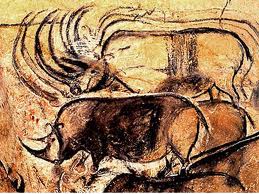
Throughout the film Herzog detaches the film from an informational documentary to a film that just captures the time and place. The cameras pan and move through the cave. The shots are sometimes wide panoramic views of the cave and then there are close-ups of the animals and the intricate design of the animals. Herzog's crew passes a light over the drawings, trying to recreate the shadows that might have existed with a fire or sunlight of century's ago. Coupled with these shots is the operatic soundtrack that adds a sense of grandeur and opus to the images. It may be a bit heavy handed but this is common Herzog device to illicit awe in the world in which he is filming. What Herzog may really be trying to do is not put music to his film but rather the story that is on the cave walls. It is as if our more modern music could capture the scope of the potential stories that the cave has to offer. In one section Herzog interviews a scientist who talks about a primitive flute that was found in a similar cave. The scientist plays the Star Spangled Banner with the flute but one can see that for a civilization years beyond our comprehension there may very well have been a full experience of sight and sound in their story telling. The primitive flute may have added a layer to the ancient story telling of the cave paintings. This further taking the cave paintings and making them extra sensory and beyond the everyday world of those people. Just as filmmakers today put us in worlds beyond ourselves with various cinematic aesthetics and technologies.
Herzog's exploration of the Chauvet cave is an exploration of the dreams of a people long gone. Their only remains can only offer us so much just as our dreams leave us with such little. Our dreams are no different from those of centuries past. Sure our tools and worlds are different, but we are still grasping at wonder and searching for the purposes of our dreams. At the end of the film Herzog tells us that the cave is being even more restricted due to the discovery of mold on the caves walls due to the explorations that have taken place. There is still much more to explore but time has a way of breaking down the dreams and desires. Langston Hughes once wrote that there are two ends to all dreams, fulfilled and unfulfilled. Both are tragedies. Such is the Cave of Forgotten Dreams.
" No other art-medium—neither painting nor poetry—can communicate the specific quality of the dream as well as the film can. When the lights go down in the cinema and this white shining point opens up for us, our gaze stops flitting hither and thither, settles and becomes quite steady. We just sit there, letting the images flow out over us. Our will ceases to function. We lose our ability to sort things out and fix them in their proper places. We're drawn into a course of events—we're participants in a dream." - Ingmar Bergman
Thursday, July 12, 2012
Tokyo Olympiad

Competition has a way of bringing out the true character in ones self. It is possible that by exposing ones character in a competitive realm that those competitors would be able to come to some sort of understanding about each other. The modern Olympic games began in 1896, nations from around the globe came to compete in varying events to showcase not only ones national talent but also to demonstrate that competition through athletics was better than competition through war. Unfortunately some of the Olympic games have been cancelled due to war or have been boycotted by differing nations over political purposes. This year athletes will once again come together in London to compete in the summer Olympic games. With each Olympic games the host country designates certain filmmakers to document the events of those games in a manner that is fitting. In 1964 at the Tokyo Olympics Kon Ichikawa documented the games, in what many critics feel to be as one of the most important documentarys of the Olympics. Tokyo Olympiad is more than a film that retells the events of that years games but rather is a piece that delves into the soul of Olympic games and the peaceful balance that comes from competition.

The opening of Tokyo Olympiad is a shot of the sun as it hangs in the sky. It is not certain whether this is the sun of the dawn or at sunset but Ichikawa connects the natural world as not only being the symbol of the Japanese flag but also the source of life to the Olympic games. Ichikawa then juxtaposes shots of preparation for the games with the transportation of the Olympic torch, from Athens to Tokyo. In these brief moments Ichikawa establishes the form in which he is going to tell the story of this Olympic games. There is narration in some parts but then there is narration soley through editing and juxtaposition of images. Ichikawa does not want to just tell us what happened but experience the total aspects of the Olympic games. This total approach, focusing not just on athletes and results but on the varying components of the Olympic games, allows the audience to experience the soul of the games. This soul is related to what George Plimpton writes in his thoughts about the film:
"I remember Earnest Hemingway telling me once that the unnoticed things in the hands of a good writer had an effect, and a powerful one, of making readers conscious of what they had been aware of only subconsioucsly. A parallel addage suggests that a great photographer can take a picture of a familiar street and tell you something about it you never knew before. After watching the 1964 Tokyo Olympiad, one can surely say that Ichikawa is of that tradition."

"I remember Earnest Hemingway telling me once that the unnoticed things in the hands of a good writer had an effect, and a powerful one, of making readers conscious of what they had been aware of only subconsioucsly. A parallel addage suggests that a great photographer can take a picture of a familiar street and tell you something about it you never knew before. After watching the 1964 Tokyo Olympiad, one can surely say that Ichikawa is of that tradition."

The soul of the Tokyo games can also be characterized by the Japanese term Mono No Aware. Mono No Aware can be described as, "the way of things" or the passing notion of things. In some respects one can say that the defining moments of Mono No Aware are not in grandiose moments but rather the fine details of living. In one scene the filmmaker follows one of the athletes from the African country of Chad. That year Chad only sent two athletes to the games and the athlete that is focused on is a runner in the 800 meter event. Ichikawa does not invade the athlete with questions, thoughts or sentimentality. Rather Ichikawa follows the routine of the athlete at a distance letting us take in this athlete without any expectation. We see the athlete train in the Olympic village alone, even though he is surrounded by other athletes training. We see the athlete eat diner in the Olympic village cafeteria. Once again he is alone, even though he is in a room filled with other athletes. The narrator expresses how the athlete qualified for the semi-final round and that is more than what could have been hoped for by this athlete. We then see the athlete compete in the semi-final and not qualify for the finals. Ichikawa cuts between the athlete running and the opening ceremony where the athlete enters the track. By running the race the athlete is representing more than himself but his nation on a grand stage. Even though victory is not in store there is a solemn pride in having competed. The athlete walks off the track and that is the Olympic games for him. This result is easily lost in the history of the 800 meter event but Ishikawa shows the importance of this athletes journey as one that defines what the Olympics are about. Even in such a prestigous competition as the Olympics, which is wrought with drama, there is silent drama that plays itself out in the simple moment of walking off the track or an official collecting hammers after the hammer throw. If we focus on who won or lost we miss "the way" of that competition. Ichikawa refuses to let us miss "the way of things."

In one instance Ichikawa shows us the mens 100 meter final. The race takes no more than ten seconds and it is easy to miss who actually won the race or what happened during the race. Ichikawa not only shows us the real time event but then goes back and shows the event in slow motion. From the placing of the starting blocks to the preparation of the runners, to the split second of the start and the springing into motion countless muscles, the 100 meter race never felt so long. At least we are not able to miss the details of the competition. Each moment of the race is imperative and by viewing the parts of the race in slow motion we are able to better appreciate the whole race. It is throughout Tokyo Olympiad that Ishikawa uses slow motion to show us the "way of things" in competition.
Ishikawa does not show us all the events of the 1964 Olympics but even in brief highlights we are shown the humanity of competition and the struggle to push ones self beyond their limits. The marathon races is the last competition to be run in the Olympics and is the last event focused on in Tokyo Olympiad. Ishikawa follows the competitors through the long grueling race as they travel the streets of Tokyo. The pained expressions of the runners faces and the crowds that line the streets in eager aplomb shows that the marathon is more than a race to see who can win but who can finish the distance. Ishikawa focus's on the runners as they come to water stops. The camera's focus on how the runners take a drink or refuel before going forward. Some runners come to a complete stop and one can wonder if those runners are having doubts about finishing. Other runners refuel and go trying to keep their momentum. The winner of the race, Abebe Bikila of Ethiopia, is shown as a driving force. His stride and look of determination does not waver. In one instance Ishikawa follows Bikila in a slow motion close up. The slow motion makes Bikila look as if each stride is easy and that even in the longest race of the Olympics there is a beauty to running such a great distance. Bikila would win the race easily but Ishikawa does not just focus on him.

Ishikawa also shows the difficulties of finishing the race. He shows one runner who breaks down and comes to a stop, eventually sitting down on the side of the road asking for water. The spectators help him but the race is over for that runner. Even those who finish are left to deal with recovering from the long distance. There are blistered feet, exhausted muscles and broken bodies. In many ways Ishikawa uses the marathon as a microcosm for the entire Olympic games. But even as the competitions come to an end and pass away, there is always the hope of an even greater competition that lies ahead.

The film closes with the closing ceremony of the games. Certainly the closing ceremony is not as grand in the film as they are in these more modern times. Ishikawa though shows that the beauty of the end of the games is centered in the unity of the athletes celebrating their triumphs. The representatives of the varying nations come together in the Olympic stadium and wave their goodbyes and we are left with the expectation that the next Olympic games could be even greater. There is much one can write about Tokyo Olympiad ( And I could certainly write more!) What Tokyo Olympiad still shows us is the fading beauty of competition and (in the words of a wise Teacher) that the race is not to the swift, nor the battle to the strong, but time and chance happen to them all.

In one instance Ichikawa shows us the mens 100 meter final. The race takes no more than ten seconds and it is easy to miss who actually won the race or what happened during the race. Ichikawa not only shows us the real time event but then goes back and shows the event in slow motion. From the placing of the starting blocks to the preparation of the runners, to the split second of the start and the springing into motion countless muscles, the 100 meter race never felt so long. At least we are not able to miss the details of the competition. Each moment of the race is imperative and by viewing the parts of the race in slow motion we are able to better appreciate the whole race. It is throughout Tokyo Olympiad that Ishikawa uses slow motion to show us the "way of things" in competition.
Ishikawa does not show us all the events of the 1964 Olympics but even in brief highlights we are shown the humanity of competition and the struggle to push ones self beyond their limits. The marathon races is the last competition to be run in the Olympics and is the last event focused on in Tokyo Olympiad. Ishikawa follows the competitors through the long grueling race as they travel the streets of Tokyo. The pained expressions of the runners faces and the crowds that line the streets in eager aplomb shows that the marathon is more than a race to see who can win but who can finish the distance. Ishikawa focus's on the runners as they come to water stops. The camera's focus on how the runners take a drink or refuel before going forward. Some runners come to a complete stop and one can wonder if those runners are having doubts about finishing. Other runners refuel and go trying to keep their momentum. The winner of the race, Abebe Bikila of Ethiopia, is shown as a driving force. His stride and look of determination does not waver. In one instance Ishikawa follows Bikila in a slow motion close up. The slow motion makes Bikila look as if each stride is easy and that even in the longest race of the Olympics there is a beauty to running such a great distance. Bikila would win the race easily but Ishikawa does not just focus on him.

Ishikawa also shows the difficulties of finishing the race. He shows one runner who breaks down and comes to a stop, eventually sitting down on the side of the road asking for water. The spectators help him but the race is over for that runner. Even those who finish are left to deal with recovering from the long distance. There are blistered feet, exhausted muscles and broken bodies. In many ways Ishikawa uses the marathon as a microcosm for the entire Olympic games. But even as the competitions come to an end and pass away, there is always the hope of an even greater competition that lies ahead.

The film closes with the closing ceremony of the games. Certainly the closing ceremony is not as grand in the film as they are in these more modern times. Ishikawa though shows that the beauty of the end of the games is centered in the unity of the athletes celebrating their triumphs. The representatives of the varying nations come together in the Olympic stadium and wave their goodbyes and we are left with the expectation that the next Olympic games could be even greater. There is much one can write about Tokyo Olympiad ( And I could certainly write more!) What Tokyo Olympiad still shows us is the fading beauty of competition and (in the words of a wise Teacher) that the race is not to the swift, nor the battle to the strong, but time and chance happen to them all.
Thursday, May 3, 2012
Jesus Camp

I was once told that there are two things one should never talk about, politics and religion. That certainly sounds like good advice but the more I hear it the more I want to talk about politics and religion. What topic doesn't make any conversation livelier? I think the reason why I was given this advice is that the passion that surrounds such topics. If one were to peruse through twenty-four hour news channels, one would certainly see something on these two topics and their interplay. Depending on which talking head is talking, or which station is hosting them, one would be left with some understanding of an issue or event. But most likely having witness someone fighting for what is their cause with no remorse for who is in the way.

There is no doubt that the United States of America is a country that proudly boasts a large demographic of Christian believers. Throughout the country there are a spattering of churches big and small, protestant, catholic, non-denominational and whatever else. Most, if not all, of these churches in some way have a program for the children of the church. The sphere of debate over politics and religion may be cornered by adults but in the film Jesus Camp (Ewing and Grady, 2006), it is the children that are the focus.
Jesus Camp opens with a battle cry by a preacher to win the nations cultural war that is going on. The filmmakers overlay this with shots of rural America. An America intersected with highways, truck stops and those hints of down home patriotism. The filmmakers take us into a dimly lit radio station to hear the Ring of Fire talk radio show being broadcast. It is clear from the broadcast that the topic at hand is the role of conservative evangelicals in the political sphere. One caller feels that the message of Christianity is being lost do to those who want political power.

The filmmakers center on the evangelical ministry of Becky Fischer and her focus of reaching children for Jesus Christ. Becky stands before rows and rows of children, most likely between the ages of 6 to 13. Her message is one that challenges the students to take action and be change agents of their personal world and the greater world around them. The filmmakers focus on the young faces of these students as they fidget and listen to the message. When Becky rouses the children to pray and pray in "tongues" (a pray that relies on non-sylable utterances and unknown phrases). The children's participation in the prayer is disorienting but also terrifying. In one instance the children seem passive to the message but in a cut, in a moment, there are children crying, screaming, shaking on the floor and calling out for God.

The filmmakers don't just leave us with this moment but pull us out and have us see Becky viewing what we have just seen and describing what is happening. Her explanations of the events are compared to her knowledge of what radical Islam is doing with children in the middle east. Becky's rhetoric espouses a clear battle line between Christianity and the World. Becky does walk into the line that President George W. Bush is in a way leading America in the right direction based upon the presidents personal declaration as a christian. In one scene at the Jesus Camp a cardboard cutout of the President is prayed over and the President is described as being a President who has surrounded himself with Spirit filled people. Which may very well mean that he can do no wrong.

Throughout the film the filmmakers bring up various hot button issues. Whether it is global warming and creation vs. evolution in a home school scene. Or the issue of abortion when a guest speaker speaks to the children about life. The filmmakers show the children and their response to the messages that adults give them. It seems very clear that the filmmakers are showing the children to be indoctrinated with the messages of Christianity. There is a naivety in the children's actions but there certainly seems to be a genuine desire from the children to practice what they are being preached.
When the children go to the Jesus Camp it is there that they are fully immersed in the issues that face the world around them and they are told what to believe about those issues. At times it seems that the leaders are forcing the children into believing and pushing the children to repent of sins and make major decisions in a split second. There is a manipulative aspect to Becky's ministry and she explains that in one scene. She knows full well that in order to get the message across she has to use visual means to get to the children. Whether that's using balloons, stuffed animals, a brain mold or Power Point presentations.
For as much as we experience a world of extreme Christian faith, I cannot help feel that there is as much manipulation on the filmmakers end to create a film that shows the hypocrisy of ideology and a repressiveness that leads to extremism. In the scene where the children are praying in "tongues" the filmmakers add to the scene a soundtrack that only heightens the disorientation of the editing and the praying. Even in the homeschooling scene the filmmakers just focus on the message of global warming and evolution as problematic. There is much that is missing from the children that are focused on in the film. Levi is shown as a budding young preacher who is fully indoctrinated and completely sold to the words of the adults that surround him. Another child, Racheal, is highly opinionated and quit bold in her faith witnessing to those around her. It seems that the filmmakers are saying that all these children do is eat, sleep and breath Christianity.

Levi certainly seems to be a child version of an adult preacher. One can see his soaking in the message that adults preach to him. When Levi visits Ted Haggerd's church, he impressed by the message and one could see the desire to one day be in a similar position. Levi desires a better world, a better country that he believes can come through God, the Holy Spirit and Jesus Christ. All we know about Levi is his views on faith. The rest of his life is a mystery as well are the other children.
Now that it is six years after the films release much has changed in the political landscape in America. Debates still rage and during election years matters of faith and evangelicals let their voice be known about who they want to lead the country. The film ends with Becky debating on the Ring of Fire radio show and news of a new Supreme Court Judge's nomination approved. The filmmakers may very well be saying that a change is coming and that one day these young children will be grown up. Their voices will enter the political atmosphere and may very well come to be the leaders of the country. If Jesus Camp is a film to instill fear in its viewers then the aesthetics and construction of the film succeeds in making a compelling argument for that.
What is interesting is that two years after the films release a new president came into office that many evangelicals would feel represents the opposite of their belief's. Levi is now older and his representation in the film is expressed differently, though Levi is still preaching the word and fighting the spiritual battle. (See hear Levi Update) Jesus Camp does still beg the question of genuine belief and how belief interacts in the political realm. The answers to those questions may never be known and all views will continue to be played out for sound bites and incendiary emotions leading to decisions that may very well do us more harm than good.
Wednesday, July 27, 2011
Best Worst Movie

Rankings are a dubious science. Especially when asking those with a limited knowledge to rank something that requires more than a Cliff Note education. We have all seen movies but seeing a movie does not make us an expert on the subject of Film. There are countless lists of top ten movies being made every year about films. These lists range all genre's and sub-genre's and of course, here in the U.S.A, the culmination of ranking and award, the Academy Awards. The debate over the top movies of all time certainly gets the most attention but the worst movie of all time. Well that's a completely different light all together.
If one were to scower the internet sights of bad movies, one would see a few titles constantly appearing on each different website. I'm sure you would come across the film Troll 2 (Claudio Fragasso, 1990). The film is a horror movie about a family who goes on vacation in a town that is inhabited by Goblins who want to eat them. My experience with Troll 2 came about at a young age when the film made its way to cable television and HBO. I understood that the film was supposed to be a horror film but this was not a horror film that I was familiar with. The quality of the film did not look like other horror movies nor did the film seem horrific. There was something very different about the film but being young I could not figure out what that was. I remember being grossed out by the actions of the monsters and even the monsters themselves were a bit creepy. Now years later Troll 2 comes to life in a different way through the documentary Best Worst Movie (Michael Stephenson, 2009). And now I understand fully what made Troll 2 so different.

With Best Worst Movie Michael Stephenson tries to figure out why exactly Troll 2 became one of the worst movies ever. The film primarily focuses on George Hardy. Hardy played the father in Troll 2 and his life after Troll 2 is one of success. George is a dentist in a small town in Alabama, he is well known for his dentistry and general joyous attitude towards people. Michael Stephenson, who himself was in Troll 2 as a young child actor, follows George as he discovers the cult following of Troll 2 and reconnects with other cast members.

Throughout the film George attends midnight screenings of Troll 2 and conducts Q and A sessions with audience members. George is not ashamed that Troll 2 is a terrible film. Of course those who like Troll 2 like the poor acting, strange dialogue and the films lack of production value. For those who love Troll 2 they equate the film to watching a train wreck. But the documentary shows that Troll 2 being labeled the worst movie is as much a compliment as being the best movie ever. The popularity of the film surprises George and other cast members who go to screenings and what is looked at as a stain by the actors of Troll 2 becomes more a less a badge of honor.
What is obvious about Best Worst Movie is that time has a way of giving perspective. Troll 2 is still a bad movie but with Best Worst Movie looking at the cult phenomena of Troll 2 there is regeneration even in poor efforts. We all have the potential of being the worst at something and that may never change but the way we attempt says something about our character. And that often makes us better and sometimes gives us a good story to tell.
Sunday, July 17, 2011
October Country

Most recently my mother was putting together some scrap books about different parts of our family. There was a book devoted to my brother, an other book devoted to family pets and one devoted to myself. There are stories that come flooding to my mind when looking at old photos. Stories that not only define who I am now but what kind of family my family was. We have all heard the cliche of "a picture is worth a thousand words." When you take those words and put them together what kind of story do you get and what kind of story does one get when thousands of pictures are put together? October Country (Michael Palmieri and Donal Mosher, 2009) is a film that can be easily defined as a portrait of the Mosher family. Pictures and portraits combined that tell a story. The film traces the story of the Mosher's from Halloween to the following Halloween. In this time period the filmmakers portray a family that is held together through the bond of family, even though challenges surround them and the bonds of family are near breaking.
The film opens in a windy October day in a cemetery in Mohawk Valley New York. The voice of Dottie Mosher explains how the grandparents of the Moshers were in conflict with each other even after death. The story of each of the grandparents funeral being disrupted by massive wind storms is not only an apt metaphor for the relationship of the grandparents but also for the Mosher family as a whole. The film shows how the Mosher family continues to deal with the "storms" of life but also how resilient the members of the family are even when it seems that all is lost.

What seems to be part of the bond that keeps the family together is their honesty about who they are, the mistakes they have made and their refusal to give up. One could easily look at the Mosher family as dysfunctional and even hopeless. As each member of the family is interviewed there are obvious moments of deep hurt and regret. The father, Don, is a former Vietnam and Gulf War veteran who is hard edged and carries memories that are a burden. His sister Denise lives alone and is involved in witchcraft. Her and Don do not get along and their problems have created a deep rift in their relationship. Daneal is one of Dottie's granddaughters who herself has a child and seems to have been mixed up in poor relationships. Donna is the mother of Daneal and Desi, she seems burned out by the choices of her life. Desi is the spunky younger daughter of Donna, who seems innocent but full of knowledge of her families problems. Besides the immediate family members, the family has taken in an older foster child named Chris. Chris's past is full of mischief and crime and his presence in the family seems transient.
The family is aware that the past seems to repeat itself with the women of the family. The conflicts within the family may seem at times bent on selfishness but in the end each of the members of the family won't abandon each other. Dottie strength and resilience of taking care of her children, grandchildren and foster children is at times beyond comprehension. Her actions may not seem influential but her actions are contagious in that when Daneal, Donna, Don or Desi seem like caving in to the hardships in their life they keep pressing forward. This even shows up in Chris who has a propensity to be resilient even when left with nothing.

The filmmakers mix interviews with shots of nature and the surrounding area of where the family lives. There is a connection between the weather and the problems that the family faces. The family is in just as much a struggle in winter as in summer. Relief comes only in small parts and Halloween seems like one of the ways that the family can come together and leave behind all of their problems. In one part of the film Don speaks about the ghosts that exist from the past, and the only thing to do is make peace with them. October Country is a cry for peace for the Mosher family. One can only hope that they will have that peace. But October Country also allows us to evaluate our family, to look at our disfunction's, problems and pain and try to come to peace with them.
Subscribe to:
Posts (Atom)